Why No Dairy After Tooth Extraction? Clots, Straws and Antibiotics
Why no dairy after tooth extraction? Learn when dairy is fine, when antibiotics change the rules, and why straws matter more than milk for your blood clot.
Editorially reviewed. This article has not been reviewed by a clinician. How we work

On this page
Why no dairy after tooth extraction? Not every dentist asks for it. Cleveland Clinic actually lists yogurt among good soft foods after an extraction. When dairy is restricted, it is usually because of an antibiotic that reacts with calcium, or because milkshakes tempt people to use a straw, which can dislodge the clot.
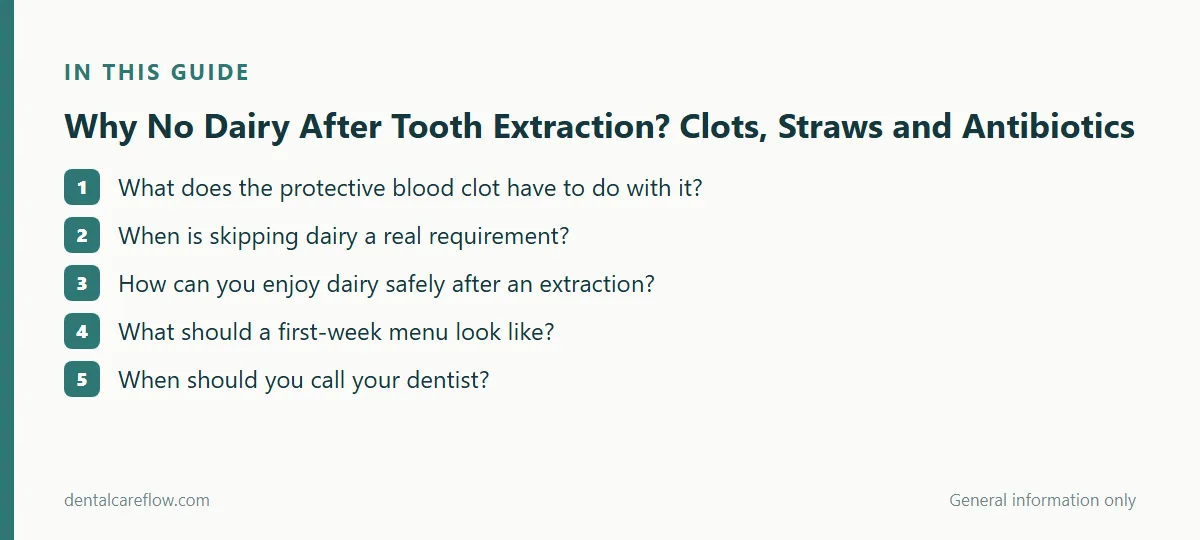
If your discharge sheet says "no dairy" and your neighbor's says "eat yogurt," both dentists can be right for their own patient. The difference usually comes down to the medicine you were prescribed and how the food is eaten. Here is how to make sense of the advice in the days after having a tooth pulled.
What does the protective blood clot have to do with it?
Cleveland Clinic explains that after an extraction a blood clot forms in the socket, which prevents dry socket and protects the jawbone and nerves. Most of the eating rules after an extraction are really about protecting that clot. Cleveland Clinic warns that drinking through a straw can disrupt the clot and cause dry socket, and that smoking and vaping reduce blood flow to the healing site.
That is where dairy often gets caught up: a thick milkshake or smoothie is the classic drink people sip through a straw. The suction, not the milk, is the problem.
When is skipping dairy a real requirement?
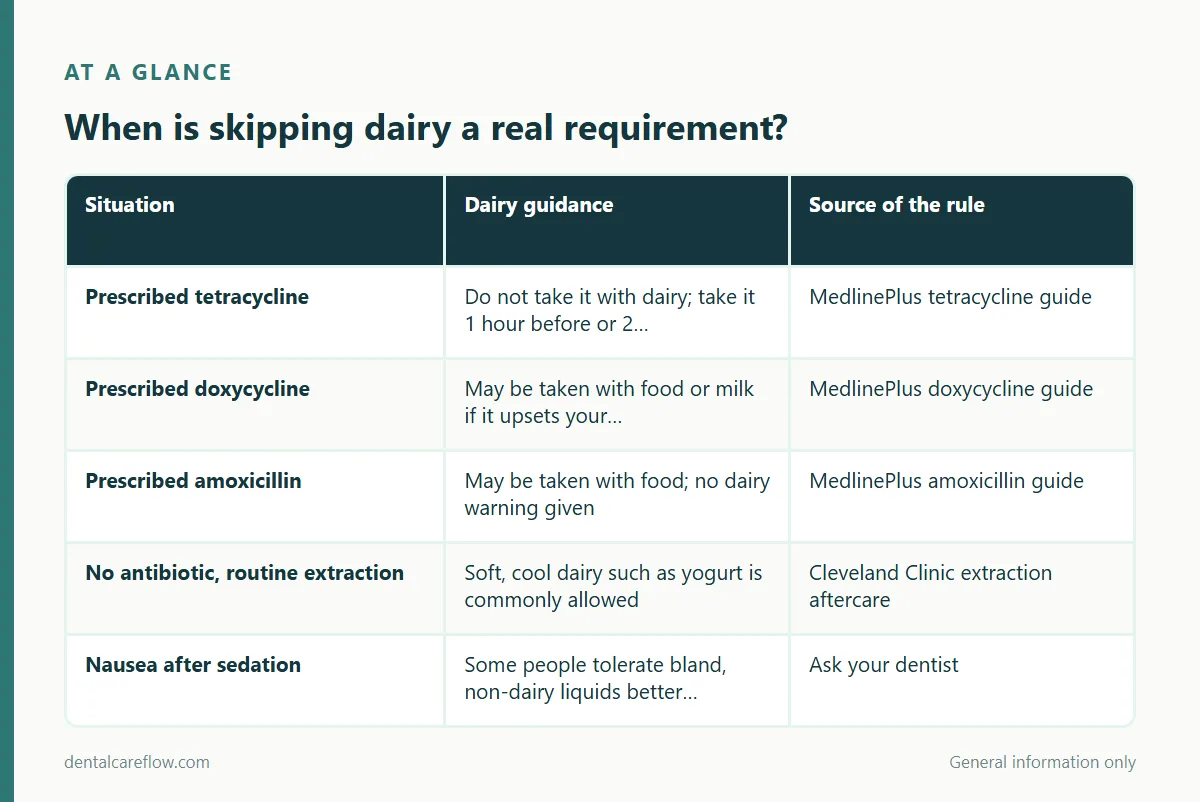
| Situation | Dairy guidance | Source of the rule |
|---|---|---|
| Prescribed tetracycline | Do not take it with dairy; take it 1 hour before or 2 hours after meals or snacks | MedlinePlus tetracycline guide |
| Prescribed doxycycline | May be taken with food or milk if it upsets your stomach; separate from calcium supplements and antacids | MedlinePlus doxycycline guide |
| Prescribed amoxicillin | May be taken with food; no dairy warning given | MedlinePlus amoxicillin guide |
| No antibiotic, routine extraction | Soft, cool dairy such as yogurt is commonly allowed | Cleveland Clinic extraction aftercare |
| Nausea after sedation | Some people tolerate bland, non-dairy liquids better at first | Ask your dentist |
How can you enjoy dairy safely after an extraction?
If your dentist hasn't restricted it, these habits keep dairy from causing trouble:
- Use a spoon, never a straw, for milkshakes, smoothies and drinkable yogurt.
- Choose smooth textures. Plain yogurt, cottage cheese and pudding are easier than yogurt with granola, seeds or fruit chunks that can lodge in the socket.
- Keep it cool, not frozen solid. Very hard ice cream invites biting and sucking; let it soften first.
- Chew on the other side and eat slowly.
- Rinse gently afterward only when your dentist says rinsing is allowed. Cleveland Clinic suggests gentle rinsing with an antimicrobial mouthwash two to three times a day and not brushing directly over the site until your dentist says it is safe.
What should a first-week menu look like?
Cleveland Clinic suggests soft foods such as rice, pasta, eggs, yogurt and applesauce. A simple plan:
- Day of the extraction: cool, smooth foods eaten with a spoon once numbness wears off.
- Days 2 to 3: soft, lukewarm meals like scrambled eggs, mashed potatoes and soft pasta. Cleveland Clinic notes that day three is usually the most uncomfortable.
- Rest of the week: gradually reintroduce more texture as comfort allows, avoiding hard, crunchy and seedy foods near the socket.
Cleveland Clinic says most people can return to routine activities within 48 to 72 hours, while the jawbone takes several weeks to heal fully, and up to four months for a large tooth such as a molar. If you are planning to replace the tooth, our article on extraction and implant on the same day explains when that is an option.
When should you call your dentist?
Call if pain gets worse after the first few days instead of better, if you notice a bad taste or smell from the socket, if bleeding won't settle with gentle pressure, or if you develop fever or swelling that spreads. These can be signs of dry socket or infection that need a check.
Sources
- Cleveland Clinic, Tooth Extraction
- MedlinePlus, Tetracycline
- MedlinePlus, Doxycycline
- MedlinePlus, Amoxicillin
This article is general information and is not a substitute for advice from your own dentist or oral surgeon. Follow the aftercare instructions you were given.
Ask about treatment and costs
Two quick questions. General information only, no diagnosis.