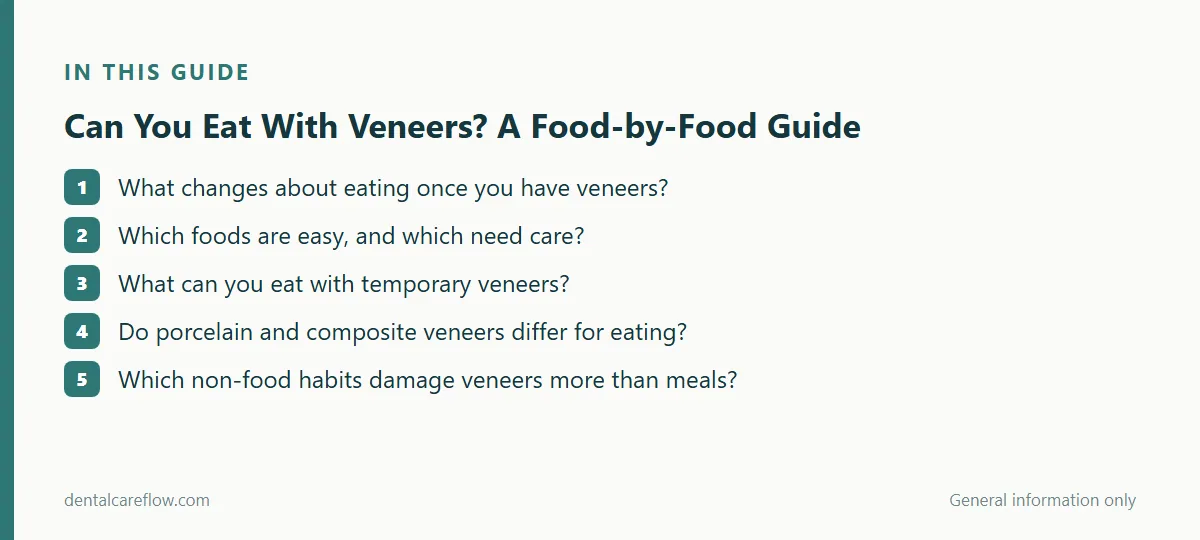
Can You Eat With Veneers? A Food-by-Food Guide
Can you eat with veneers? Yes. See which foods need care, what to eat with temporary veneers, and the habits that chip veneers more often than meals do.
Editorially reviewed. This article has not been reviewed by a clinician. How we work
On this page
Can you eat with veneers? Yes. You can eat almost everything you ate before, starting once the anesthetic wears off. The main change is cutting up hard, crunchy foods and chewing them with your back teeth.
Cleveland Clinic confirms that you can eat or drink right after your veneer appointment, as long as the anesthesia has worn off.
Veneers are bonded to the front of your teeth, so it helps to think about how food hits them rather than which foods are "allowed." This guide sorts foods by how they stress veneers, then covers the temporary phase and the habits that cause most damage.
What changes about eating once you have veneers?
Your veneers take the first contact when you bite into food with your front teeth. Cleveland Clinic advises skipping biting directly into hard or crunchy items, naming apples, carrots and tough meats as examples, and suggests cutting these foods up and chewing them with your back teeth instead. The ADA's MouthHealthy site notes that a veneer may chip, crack, wear down or loosen over time and advises avoiding habits like chewing on hard objects or foods.
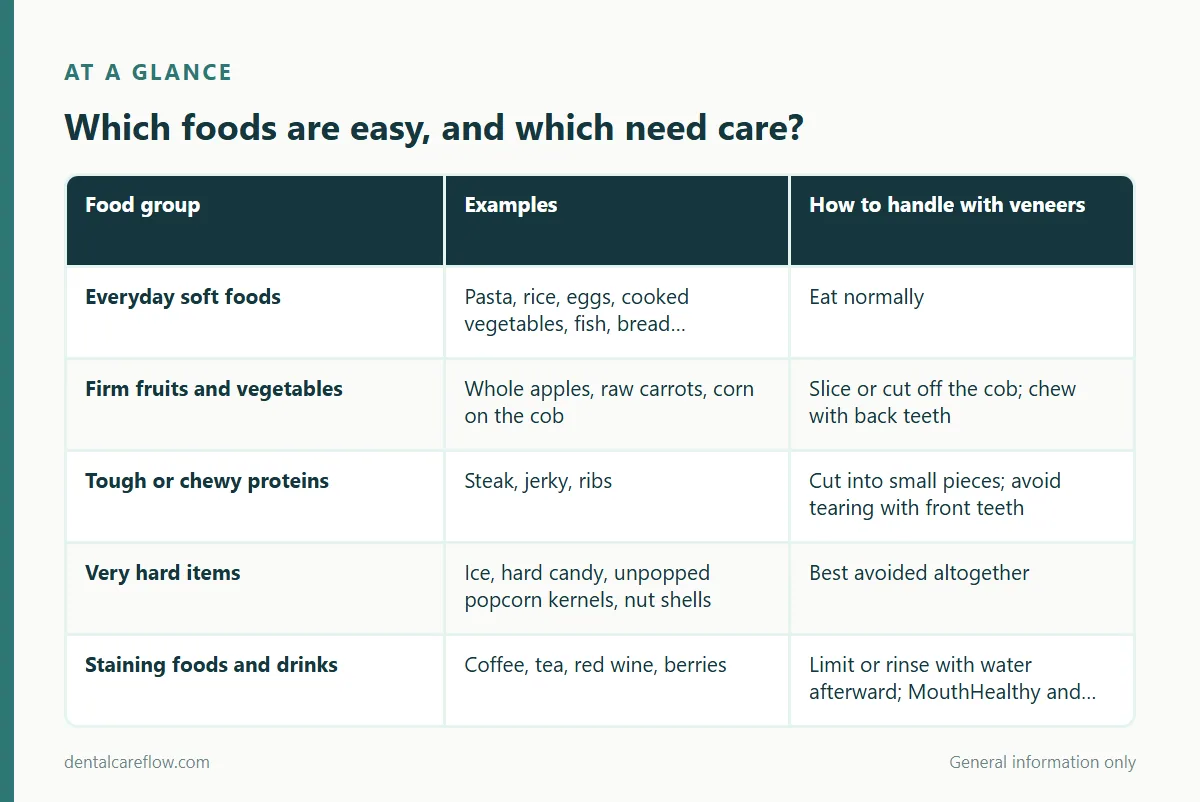
Which foods are easy, and which need care?
| Food group | Examples | How to handle with veneers |
|---|---|---|
| Everyday soft foods | Pasta, rice, eggs, cooked vegetables, fish, bread without a hard crust | Eat normally |
| Firm fruits and vegetables | Whole apples, raw carrots, corn on the cob | Slice or cut off the cob; chew with back teeth |
| Tough or chewy proteins | Steak, jerky, ribs | Cut into small pieces; avoid tearing with front teeth |
| Very hard items | Ice, hard candy, unpopped popcorn kernels, nut shells | Best avoided altogether |
| Staining foods and drinks | Coffee, tea, red wine, berries | Limit or rinse with water afterward; MouthHealthy and Cleveland Clinic both mention these |
What can you eat with temporary veneers?
Cleveland Clinic explains that the lab can take a few weeks to make your final veneers and your dentist may fit temporary veneers in the meantime. Temporaries are usually held more lightly than the final bonded veneers, so be gentler during this stage:
- Choose softer foods and cut everything into bite-sized pieces.
- Avoid sticky foods like caramel and taffy, which can pull on temporaries.
- Skip hard, crunchy snacks until your permanent veneers are bonded.
- Call your dentist if a temporary loosens or comes off rather than trying to reattach it yourself.
Do porcelain and composite veneers differ for eating?
MouthHealthy describes porcelain as strong and long-lasting, and composite as easier to repair but less resistant to staining and wear. In practice, the same eating advice applies to both, but people with composite veneers may want to be a little stricter about staining drinks and very hard foods. Our comparison of porcelain and composite veneers goes into the trade-offs.
Which non-food habits damage veneers more than meals?
- Nail biting and chewing pens. MouthHealthy specifically lists fingernail biting.
- Using teeth as tools to open packages or bottles. Cleveland Clinic advises against it.
- Grinding and clenching. MouthHealthy notes that veneers may not be a good choice for people who clench, grind or have a deep overbite. If you grind, ask your dentist about a night guard.
- Skipping hygiene. MouthHealthy points out that you can still get cavities under or around a veneer, so brushing and flossing remain essential.
How do eating habits affect how long veneers last?
Cleveland Clinic puts the average lifespan of veneers at 10 to 15 years with proper care and maintenance. Avoiding hard bites on the front teeth, limiting stains and keeping regular checkups all help you reach the upper end of that range. Cleveland Clinic also recommends a soft brush, non-abrasive fluoride toothpaste and avoiding whitening products, which can scratch veneers.
If you are still in the planning stage, our complete guide to dental veneers covers the basics before you commit. Veneers are not reversible, because enamel is removed to place them, according to MouthHealthy, so knowing how you will live with them matters.
Sources
- Cleveland Clinic, Dental Veneers
- ADA MouthHealthy, Veneers
This article is general information and is not a substitute for advice from your own dentist. Follow any eating instructions your dentist gives you.
Ask about treatment and costs
Two quick questions. General information only, no diagnosis.