What Are the Benefits of Dental Checkups? Prevention vs Waiting
What are the benefits of dental checkups? See what a visit does, how early care compares with waiting, how often to go and how US coverage handles it.
Editorially reviewed. This article has not been reviewed by a clinician. How we work

On this page
What are the benefits of dental checkups? Regular exams and cleanings catch cavities and gum disease early, when treatment is simpler and less costly, remove tartar that brushing can't, and give you a professional view of problems you can't see yourself.
Skipping the dentist is common in the US, often because of cost. Yet CDC data show how much quietly goes untreated: 1 in 5 adults aged 20 to 64 has at least one untreated cavity. This article lists what a checkup actually does for you and compares the cost of prevention with the cost of waiting.
What happens at a typical checkup?
Cleveland Clinic describes a cleaning visit this way: a dentist or hygienist removes bacteria, plaque and tartar from tooth surfaces, using hand tools and sometimes an ultrasonic device, then polishes the teeth. Your dentist may also suggest sealants, fluoride or X-rays. Most cleanings take 30 to 60 minutes.
What are the main benefits?
- Earlier cavity detection. X-rays help dentists find problems that aren't visible, according to Cleveland Clinic. A small cavity is usually a simpler fix than one that reaches the nerve.
- Tartar removal. NIDCR explains that plaque can harden into tartar, which only a dentist or hygienist can remove.
- Gum disease caught early. NIDCR notes that early gum disease can often be reversed, while advanced disease can damage the bone supporting the teeth.
- Prevention extras. Sealants and fluoride can be added during the same visit when appropriate.
- Fresher breath. Cleveland Clinic lists fewer germs causing bad breath among the benefits of cleanings.
- Lower long-term costs. Cleveland Clinic also notes that cleanings help you avoid larger, more costly dental problems.
How does prevention compare with waiting?
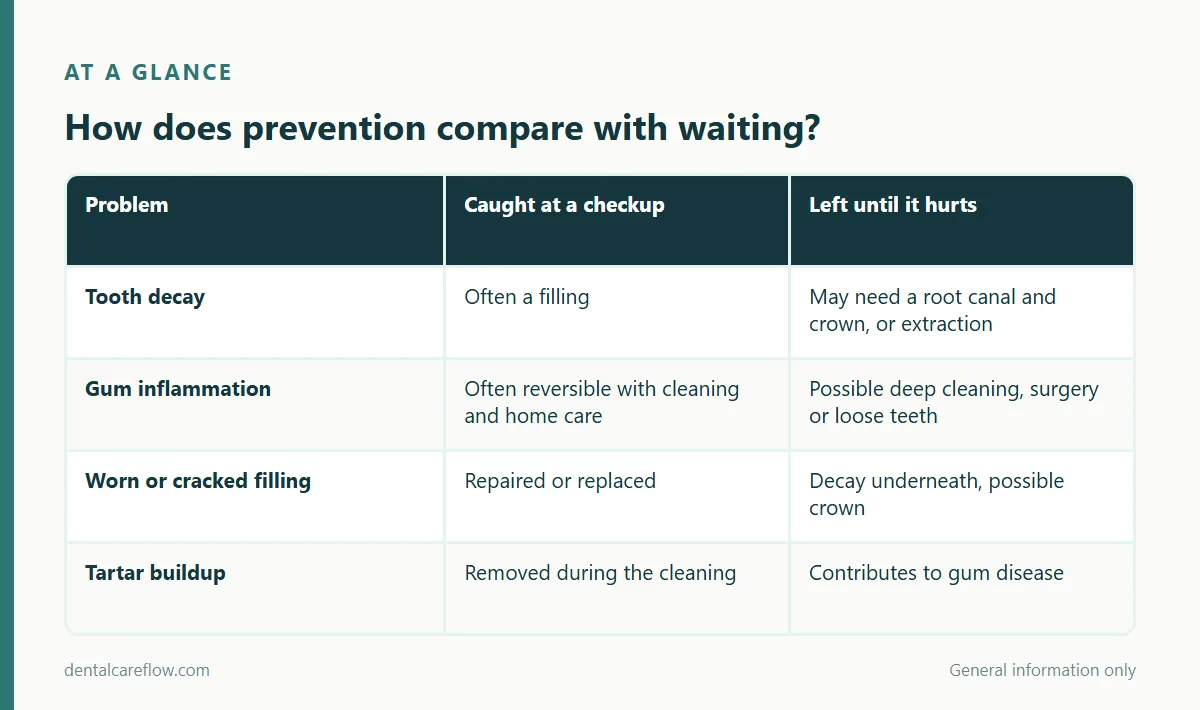
| Problem | Caught at a checkup | Left until it hurts |
|---|---|---|
| Tooth decay | Often a filling | May need a root canal and crown, or extraction |
| Gum inflammation | Often reversible with cleaning and home care | Possible deep cleaning, surgery or loose teeth |
| Worn or cracked filling | Repaired or replaced | Decay underneath, possible crown |
| Tartar buildup | Removed during the cleaning | Contributes to gum disease |
The CDC estimates that over $45 billion in US productivity is lost each year due to untreated dental disease, and that about 34 million school hours are lost each year because of unplanned emergency dental care.
How often should you go?
Cleveland Clinic says most dentists recommend a cleaning every six months and advises visiting at least twice a year. People with gum disease, a family history of cavities, a weakened immune system or significant illness or stress may need more frequent visits. Call sooner for bleeding or swollen gums, loose teeth or a toothache.
Does insurance pay for checkups?
Many US dental plans treat exams and cleanings as preventive care, which Delta Dental of Arkansas notes typically has no deductible and is covered in full when an in-network dentist provides it. Children's dental coverage is an essential health benefit in Marketplace plans, according to HealthCare.gov, while Original Medicare doesn't cover routine cleanings, per Medicare.gov. If you are uninsured, the NIDCR suggests dental school clinics and community health centers with income-based fees.
How can you get the most from each visit?
- Bring a list of medications and any health changes.
- Mention sensitivity, bleeding or jaw pain, even if mild.
- Ask what your X-rays show and which areas to watch.
- Ask how often you personally should return.
- Book the next visit before you leave.
If you have implants, checkups follow a slightly different rhythm; see our checkup schedule after implants.
Sources
- Cleveland Clinic, What Happens During a Dental Cleaning?
- CDC, Oral Health Facts
- NIDCR, Periodontal (Gum) Disease
- NIDCR, Finding Dental Care
- Delta Dental of Arkansas, Dental Insurance Terms Explained: Deductible
- HealthCare.gov, Dental coverage in the Marketplace
- Medicare.gov, Dental services
This article is general information and is not a substitute for advice from your own dentist.
Ask about treatment and costs
Two quick questions. General information only, no diagnosis.