
Is a Gold Filling Worth Anything? What Decides the Value
Is a gold filling worth anything? Learn what dental gold contains, how to tell it from amalgam, and what CDC guidance says about keeping removed teeth.
Editorially reviewed. This article has not been reviewed by a clinician. How we work

On this page
Is a gold filling worth anything? It can have some metal value, because dental gold contains real gold, but it is an alloy, the pieces are small, and the amount any buyer pays depends on the exact mix and weight.
Many people find an old gold crown or inlay in a drawer after a dental visit, or wonder about the gold in their mouth. Before you assume it is valuable, it helps to know what dental gold is made of, how to tell it apart from other metal restorations, and what US health guidance says about handling removed teeth and dental metals. This guide covers those points without guessing at numbers, since scrap value changes with the market and with each piece.
What is a gold filling made of?
A "gold filling" is rarely a filling in the everyday sense. Cleveland Clinic lists gold as an indirect filling material, meaning a dental lab makes it from an impression and the dentist cements it in place, usually over two visits. Gold is commonly used for inlays and onlays, which restore teeth with too much damage for an ordinary filling but not enough to need a full crown.
The metal is not pure. According to Cleveland Clinic, gold restorations contain gold mixed with other metals such as silver, tin, copper or palladium, which add strength. Gold crowns follow the same pattern: Cleveland Clinic groups gold with metals such as palladium, nickel and chromium in the metal crown category.
Is that "gold" actually gold? How to tell restorations apart
Not every metal restoration contains gold. The most common metal filling is amalgam, which the FDA describes as liquid mercury combined with a powdered alloy of silver, tin and copper. About half of amalgam is mercury by weight. It is often called a "silver filling" because of its color, though the FDA notes that name does not accurately describe the material.
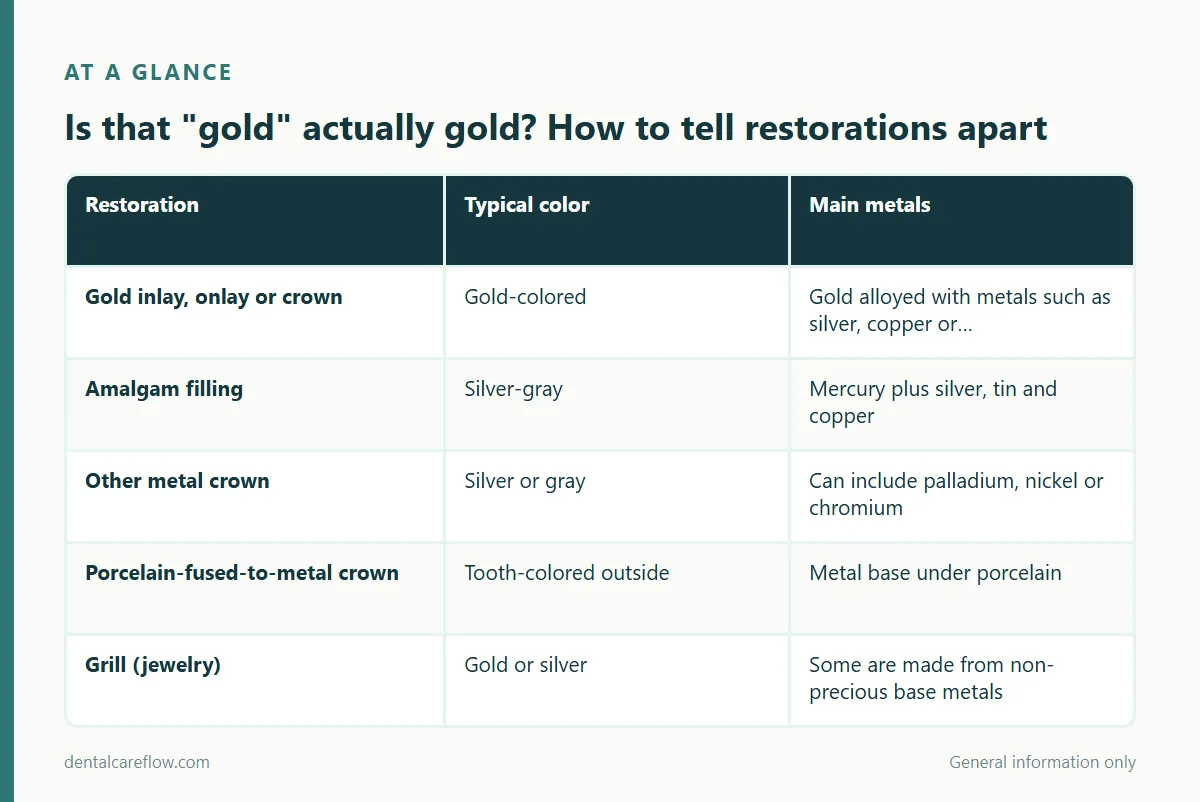
| Restoration | Typical color | Main metals |
|---|---|---|
| Gold inlay, onlay or crown | Gold-colored | Gold alloyed with metals such as silver, copper or palladium |
| Amalgam filling | Silver-gray | Mercury plus silver, tin and copper |
| Other metal crown | Silver or gray | Can include palladium, nickel or chromium |
| Porcelain-fused-to-metal crown | Tooth-colored outside | Metal base under porcelain |
| Grill (jewelry) | Gold or silver | Some are made from non-precious base metals |
Color alone is a weak guide. A yellow piece may be a gold-colored alloy with modest gold content, and a crown with porcelain on the outside may hide metal underneath. Your dentist's records, or the lab that made the restoration, may list the alloy used.
What decides whether a gold filling is worth anything?
Any value comes from the metal, not from the dental work. Three things matter:
- How much gold is in the alloy. Dental alloys differ in composition, so two pieces of the same size can contain different amounts of gold.
- How much the piece weighs. An inlay is small. A full crown contains more metal, and a multi-tooth bridge more again.
- What else is attached. Tooth fragments, cement or porcelain add weight that is not gold, and buyers account for that.
Because these factors vary so much, there is no reliable rule of thumb for a single piece. If you decide to sell, ask more than one buyer how they test the metal, whether they pay by gold content or by total weight, and get each offer in writing before you hand anything over.
Can you keep a crown or tooth your dentist removes?
Often, yes. The CDC's infection control guidance states that extracted teeth can be returned to patients on request. Once the tooth is in your hands, it no longer falls under the workplace bloodborne pathogens rules that govern dental staff. If you want an old crown or inlay back, say so before the appointment so the team does not discard it.
Teeth that are not returned are treated as regulated medical waste. The CDC adds that teeth containing amalgam should not go into medical waste that is incinerated, because burning can release mercury, and notes that many metal recycling companies accept extracted teeth with amalgam. State and local rules apply to amalgam disposal.
Should you replace gold work to cash it in?
Generally no. Gold restorations are placed to protect a damaged tooth, and removing one means the tooth needs another restoration. The FDA advises against removing amalgam fillings that are in good condition, partly because removal causes unnecessary loss of healthy tooth structure. The same question is worth raising with your dentist before replacing any sound restoration. Cleveland Clinic notes that metal crowns rarely chip or break and last the longest for wear, which is one reason gold is still used on back teeth.
If a gold crown or inlay is loose, cracked or causing pain, that is a reason to see your dentist, not a reason to remove it yourself. For background on crown materials, see our guide to dental crown types.
Frequently asked questions
Are silver fillings worth anything?
Silver-colored fillings are usually amalgam, which is about half mercury by weight. Because of the mercury, the CDC advises against incinerating teeth with amalgam and says many metal recyclers accept them; check state and local rules.
Will my dentist give me my old gold crown?
Ask before treatment. CDC guidance allows extracted teeth to be returned to patients on request, so tell the office ahead of time that you would like a removed crown or inlay handed back.
Is dental gold the same as jewelry gold?
Both are alloys, but dental gold is blended with metals such as silver, tin, copper or palladium for strength, and the recipe varies by product.
Can I tell gold content by looking?
Not reliably. A gold color does not tell you how much gold an alloy contains. Records from your dentist or testing by a buyer are more dependable.
Sources
- Cleveland Clinic, Dental Fillings
- Cleveland Clinic, Dental Crowns
- U.S. Food and Drug Administration, Dental Amalgam Fillings
- Centers for Disease Control and Prevention, Dental Infection Control: Handling Extracted Teeth
- American Dental Association (MouthHealthy), Grills
This article is general information and does not replace advice from your own dentist.
Ask about treatment and costs
Two quick questions. General information only, no diagnosis.