What Is a Filling Made Of? Materials Explained
What is a filling made of? See what amalgam, composite, glass ionomer, gold and porcelain contain, what the FDA says about mercury, and how dentists choose.
Editorially reviewed. This article has not been reviewed by a clinician. How we work

On this page
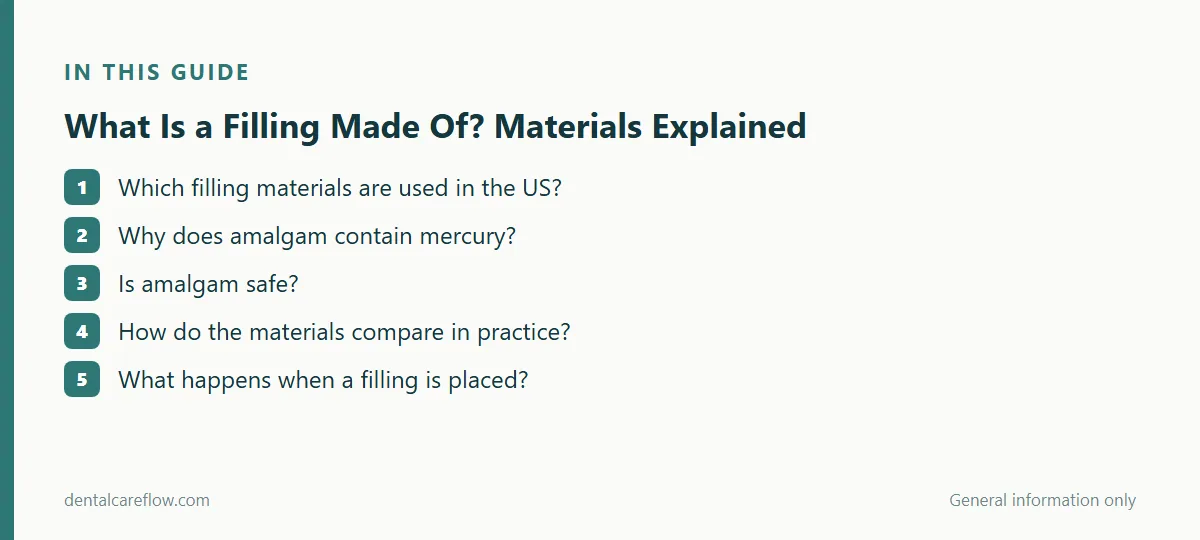
What is a filling made of? It depends on the type. Amalgam is about half mercury mixed with silver, tin and copper; composite is tooth-colored resin; glass ionomer is a tooth-colored cement; and indirect fillings are made from gold or porcelain in a lab.
Your dentist chooses the material based on the size and location of the cavity, how much chewing force the tooth takes and your own preferences. This article breaks down what each material contains, how it is placed and where it tends to be used.
Which filling materials are used in the US?
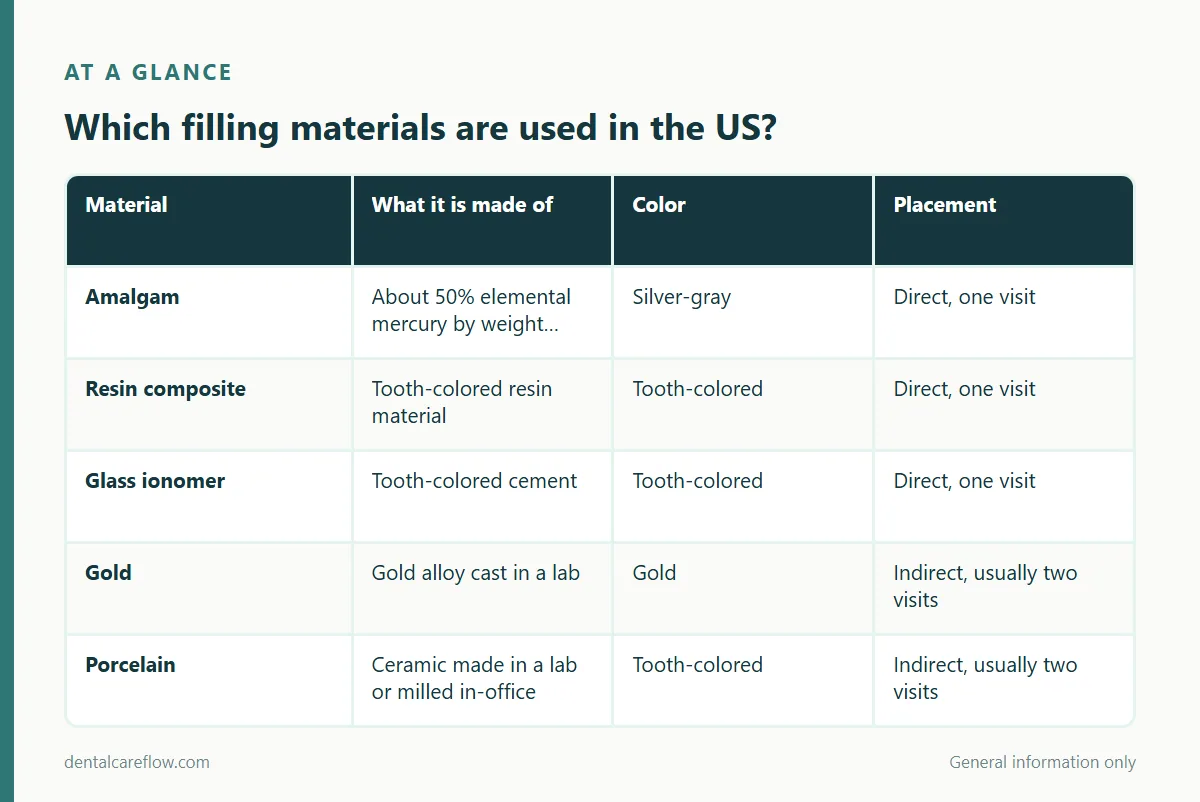
Cleveland Clinic groups fillings into two families. Direct fillings are placed in a single visit: amalgam, resin composite and glass ionomer. Indirect fillings, made of gold or porcelain, are made in a dental lab and most require two visits, though offices with CAD/CAM technology can sometimes make porcelain restorations in one appointment.
| Material | What it is made of | Color | Placement |
|---|---|---|---|
| Amalgam | About 50% elemental mercury by weight, bound with a powdered alloy of silver, tin and copper (FDA) | Silver-gray | Direct, one visit |
| Resin composite | Tooth-colored resin material | Tooth-colored | Direct, one visit |
| Glass ionomer | Tooth-colored cement | Tooth-colored | Direct, one visit |
| Gold | Gold alloy cast in a lab | Gold | Indirect, usually two visits |
| Porcelain | Ceramic made in a lab or milled in-office | Tooth-colored | Indirect, usually two visits |
Why does amalgam contain mercury?
The FDA explains that the mercury binds the alloy particles together into a strong, durable solid filling. The FDA also notes that the term "silver fillings" is commonly used but not recommended, because mercury is the main component.
Is amalgam safe?
The FDA identifies groups who may be at higher risk from mercury exposure, including pregnant women, women planning pregnancy, nursing women, children (especially those under six), people with pre-existing neurological disease or impaired kidney function, and people with known sensitivity to mercury or the other metals. For these groups, the FDA encourages non-amalgam fillings when a dentist considers them appropriate, naming composite resins and glass ionomer cements as alternatives.
Importantly, the FDA does not recommend removing amalgam fillings that are in good condition unless a health care professional considers it medically necessary, because removing intact fillings sacrifices healthy tooth structure and temporarily increases mercury vapor exposure.
How do the materials compare in practice?
- Appearance: composite, glass ionomer and porcelain blend in; amalgam and gold do not.
- Visits: direct fillings are done in one appointment; indirect gold and porcelain usually take two.
- Lifespan: Cleveland Clinic says that depending on the material, some fillings can last up to 20 years.
- Cost and coverage: indirect lab-made fillings generally cost more, and some dental plans pay differently for tooth-colored materials on back teeth, so check your plan.
What happens when a filling is placed?
Cleveland Clinic explains that your dentist first numbs the area with local anesthesia, removes the decayed part of the tooth and then fills the space. With a direct filling such as composite or amalgam, the material goes in during the same appointment and no lab or temporary restoration is needed. With an indirect gold or porcelain filling, the dentist takes an impression, places a temporary filling, and bonds the lab-made restoration at a second visit. Unless you had sedation, Cleveland Clinic says you can usually return to routine activities right after the appointment, though it is wise to wait for numbness to wear off before eating.
What should you ask your dentist about filling materials?
- Which material do you recommend for this tooth, and why?
- Will it be done in one visit or two?
- How does my insurance treat the material you suggest?
- Do I fall into any group the FDA suggests should avoid amalgam?
- Should my existing fillings be left alone?
Cleveland Clinic notes that mild sensitivity and gum soreness after a filling are normal and should go away in a week or two. For broader cost context, see our dental treatment price breakdown guide.
Sources
- FDA, Dental Amalgam Fillings
- Cleveland Clinic, Dental Fillings: Types, Materials and What They're For
This article is general information and is not a substitute for advice from your own dentist.
Ask about treatment and costs
Two quick questions. General information only, no diagnosis.