Too Young for Dental Implants Explained

Too Young for Dental Implants Explained. While dental implants are widely recognized as the gold-standard solution for replacing missing teeth in adults, their application in younger individuals presents a unique set of challenges and contraindications. The success of a dental implant is fundamentally dependent on a process called osseointegration, where the titanium post fuses directly with the jawbone, creating a stable and permanent foundation for a crown. This process requires a stable, fully-grown jawbone. For children, teenagers, and young adults whose jaws are still developing, placing an implant can lead to significant complications down the line. The primary concern is not the patient’s chronological age but their skeletal maturity. Placing an implant into a jaw that is still growing can disrupt the natural development of the facial structures, leading to aesthetic and functional problems that are difficult and costly to correct later. Therefore, understanding the relationship between jaw growth and implant viability is crucial for any young patient considering this treatment.
The Critical Importance of Skeletal Maturity
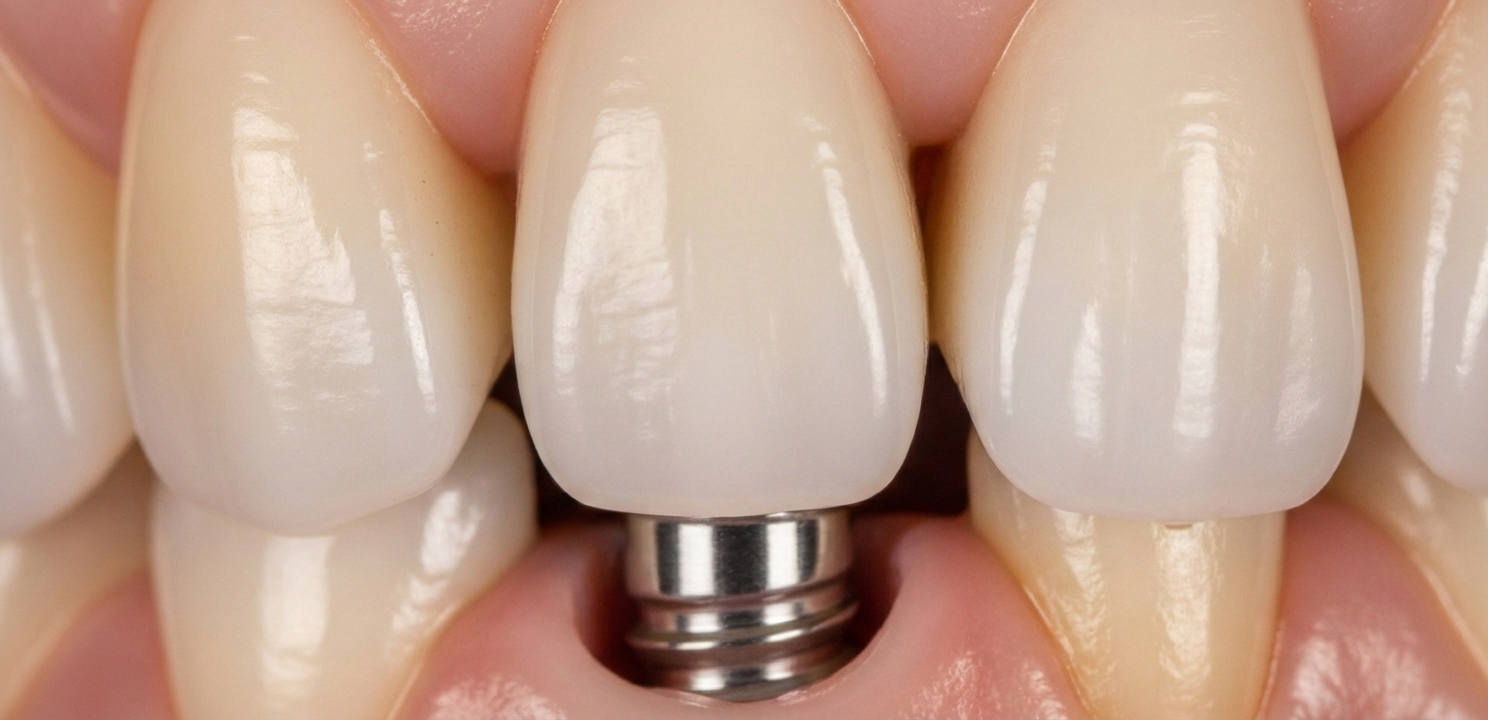
The human jaw, like the rest of the skeleton, undergoes significant growth and change throughout adolescence and into early adulthood. This growth is not uniform; the maxilla (upper jaw) and mandible (lower jaw) grow at different rates and complete their development at different times. Generally, the jaw’s vertical and horizontal growth continues until the late teens for females (around 17-18 years) and into the early twenties for males (around 20-22 years). An implant, once integrated, becomes a fixed, ankylosed part of the bone. It does not move or erupt along with the natural teeth. If an implant is placed before the jaw has finished growing, a phenomenon known as implant submergence or infraocclusion occurs. As the surrounding bone and natural teeth continue to grow and erupt vertically, the implant and its crown remain static. Over time, this results in the implant crown appearing shorter than the adjacent natural teeth, creating a noticeable and unappealing aesthetic gap. This can also affect the patient’s bite and the health of the surrounding gum tissue. This critical principle is why dental professionals are extremely cautious about placing implants in young patients. Determining the cessation of growth is paramount and is a more reliable indicator than age alone.
How Dentists Determine Jaw Growth Completion
A skilled dentist or oral surgeon will not rely on a patient’s age to make a decision. Instead, they use a series of diagnostic tools to assess skeletal maturity accurately. This multi-faceted approach ensures that the jawbone is stable enough to support a dental implant for a lifetime.
- Cephalometric Radiographs: These are specialized X-rays of the side of the face that allow the clinician to measure changes in jaw dimensions over time. By taking these radiographs at six to twelve-month intervals, a dentist can superimpose the images and verify that no further growth is occurring. The absence of change between two consecutive radiographs is a strong indicator of skeletal maturity.
- Hand-Wrist Radiographs: In some cases, an X-ray of the patient’s hand and wrist can be used to assess their overall skeletal development. The stages of bone fusion in the hand are a reliable indicator of the patient’s position on the growth curve and can help predict when jaw growth will be complete.
- Clinical Assessment: A thorough physical examination and review of the patient’s growth history, including asking about recent changes in height, shoe size, or clothing size, can provide supplementary evidence about their growth status.
What Are the Risks of Being Too Young for Dental Implants?
Placing a dental implant prematurely is not just an aesthetic risk; it can cause a cascade of functional and structural problems. The consequences can be complex and often require extensive restorative or orthodontic work to correct. A patient must be considered a good dental implant candidate not just in terms of bone density but also skeletal stability. Ignoring the growth factor introduces severe risks.
Detailed Complications of Premature Implantation
The primary issues stem from the implant’s inability to adapt to a changing environment. While natural teeth have a periodontal ligament that allows for slight movement and adjustment during growth, an implant is rigidly fused to the bone.
- Aesthetic and Positional Discrepancy: As mentioned, the implant will appear to sink as the adjacent teeth and jaw continue their downward and forward growth. This creates an uneven smile line and can lead to food traps and difficulty cleaning, increasing the risk of periodontal issues around the neighboring teeth.
- Interference with Orthodontic Treatment: If a young patient requires braces in the future, a fixed dental implant can act as an immovable anchor, severely complicating the desired tooth movement and potentially compromising the final orthodontic result.
- Damage to Adjacent Tooth Roots: As the jaw grows, the roots of adjacent natural teeth may shift. A prematurely placed implant can obstruct this natural movement, potentially causing root resorption or other damage to the healthy neighboring teeth.
- Compromised Bite (Occlusion): The malposition of the implant crown can disrupt the patient’s bite, leading to uneven wear on other teeth, potential jaw pain, and temporomandibular joint (TMJ) issues. Research published in the National Center for Biotechnology Information highlights the challenges and considerations for implants placed in growing patients, underscoring the importance of waiting for skeletal maturity.
Transitional Solutions: Bridging the Gap Until Implant Readiness
Losing a tooth as a young person can be emotionally and functionally challenging. Fortunately, several excellent temporary or transitional solutions are available to restore appearance and function while waiting for the jaw to fully mature. These options are designed to be non-invasive to the underlying bone and can be easily removed or replaced when the time is right for a permanent implant.
| Transitional Solution | Description | Primary Advantages | Primary Disadvantages |
|---|---|---|---|
| Removable Partial Denture | Often called a “flipper,” this is a simple acrylic appliance with a prosthetic tooth that fits into the gap. It is held in place by small clasps that grip adjacent teeth. | Cost-effective, non-invasive, easy to fabricate and adjust. | Can be less stable, may affect speech initially, must be removed for cleaning. |
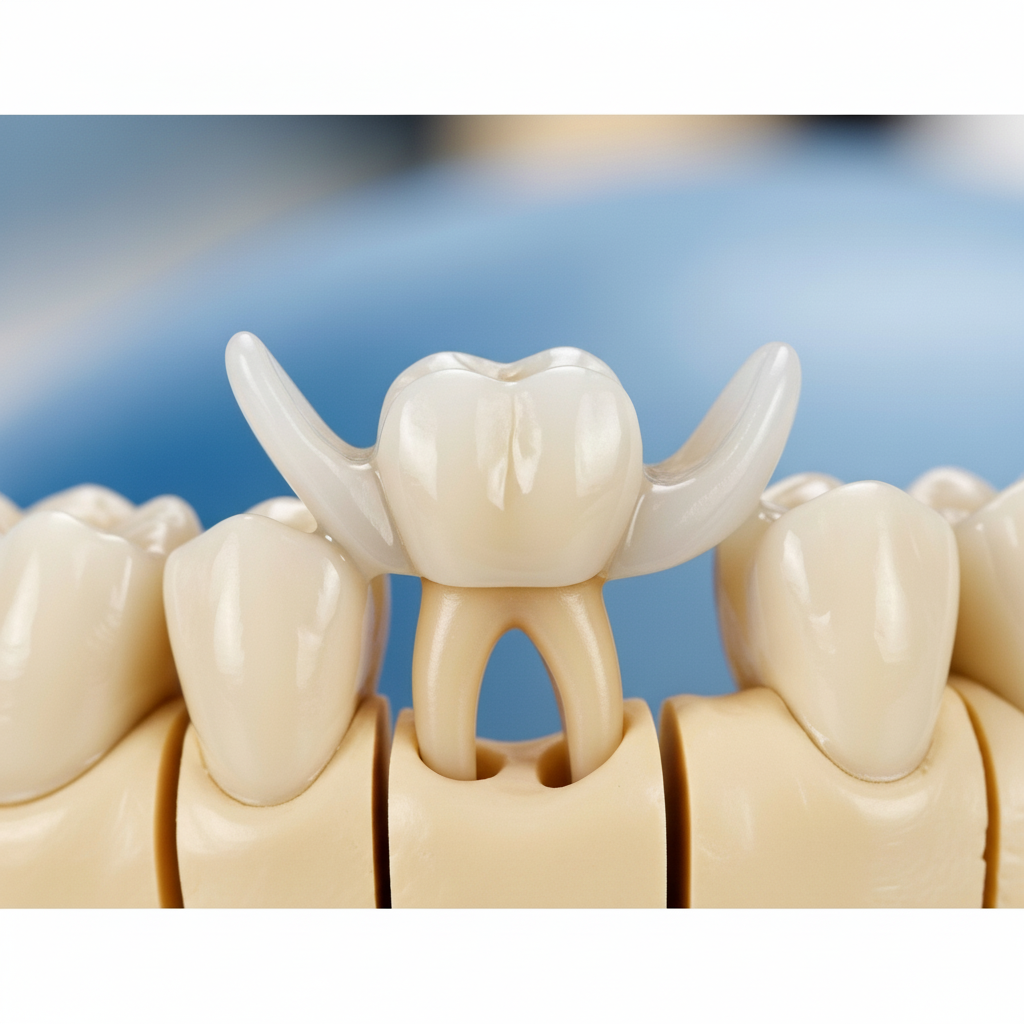
| Resin-Bonded Bridge (Maryland Bridge) | A prosthetic tooth with two small “wings” on the sides. These wings are bonded to the back of the adjacent teeth, holding the replacement tooth in place without grinding down healthy tooth structure. | Aesthetically pleasing, conserves tooth structure, feels more fixed than a denture. | Bond can sometimes fail and need re-cementing; not suitable for areas with heavy biting forces. |
| Orthodontic Space Maintainer | If the patient is already in or planning for orthodontic treatment, a temporary prosthetic tooth can be attached to the orthodontic wire to fill the space aesthetically. | Maintains space perfectly for the future implant, integrated into existing treatment. | Only an option for patients undergoing or about to undergo orthodontics. |
| Essix Retainer with Pontic | A clear, vacuum-formed retainer (similar to an Invisalign aligner) is made to fit over the teeth, with a tooth-colored material filling the space of the missing tooth. | Excellent aesthetics, comfortable, easy to clean, also serves as a retainer. | Must be removed for eating, can be lost or broken if not handled carefully. |
Planning for the Future: The Long-Term Treatment Pathway
For a young patient who has lost a tooth, the journey to a dental implant is a marathon, not a sprint. The treatment plan focuses on preserving the space and bone health until skeletal maturity is reached. The process involves patience and a collaborative approach between the patient, parents, and the dental team. The typical pathway involves several key stages. First is the initial assessment and implementation of a transitional solution like those detailed above. The most important function of this temporary fix is to prevent the adjacent teeth from drifting into the empty space, which would complicate or even prevent future implant placement. Second is the period of monitoring. Regular check-ups, often including annual radiographs, will be scheduled to track jaw development. This patient observation phase is the most critical part of the process. Finally, once the dental team confirms that growth has ceased, the patient can proceed with the definitive dental implant surgery, confident that the foundation is stable and the final result will be both beautiful and long-lasting.