Dental Implant for Multiple Missing Teeth
Dental Implant for Multiple Missing Teeth is a definitive solution that restores not only your smile but also the full function and health of your mouth. When you are faced with several adjacent or non-adjacent missing teeth, the consequences can extend far beyond aesthetics, affecting your ability to chew, your speech, and even the structural integrity of your jaw. Unlike traditional dentures or bridges that rest on the gums or adjacent teeth, dental implants provide a permanent, stable foundation by integrating directly with the jawbone, mimicking the natural root system of your original teeth. This modern approach offers a range of options, from supporting a fixed bridge to anchoring a full arch of new teeth, ensuring a personalized and highly effective long-term outcome.
Understanding the Challenge of Multiple Missing Teeth
Losing more than one tooth creates a cascade of oral health issues that can worsen over time if left unaddressed. The gaps in your smile are just the most visible part of a more complex problem. Understanding these underlying challenges highlights why a robust solution like dental implants is often the most recommended course of action by leading dental professionals.
Impact on Oral Health
The most significant consequence of tooth loss is jawbone resorption. The jawbone requires constant stimulation from tooth roots to maintain its density and volume. When teeth are missing, this stimulation ceases, and the bone in that area begins to deteriorate. This loss of bone can alter the shape of your face, leading to a sunken appearance, and can complicate future implant procedures if not addressed promptly. Furthermore, the remaining natural teeth will start to shift and drift into the empty spaces. This movement can disrupt your bite alignment, causing issues like TMJ (temporomandibular joint) disorders, headaches, and excessive wear on your other teeth.
Functional Difficulties
The ability to chew properly is severely compromised when multiple teeth are missing. This can force you to avoid certain foods, leading to potential nutritional deficiencies and a diminished enjoyment of meals. Hard, crunchy, or fibrous foods like nuts, fresh vegetables, and certain meats become difficult or impossible to eat. Speech can also be affected, as teeth play a crucial role in forming certain sounds. Gaps can cause slurring or whistling, impacting clear communication and self-confidence.
Psychological and Social Effects
The aesthetic impact of missing teeth can be profound. Many individuals feel self-conscious about their smile, causing them to hide it in social situations or avoid smiling altogether. This can lead to a significant decline in self-esteem and can affect personal and professional relationships. Restoring your smile with a permanent, natural-looking solution is not just about oral health; it is about reclaiming your confidence and improving your overall quality of life.
Solutions Using a Dental Implant for Multiple Missing Teeth
Fortunately, modern dentistry provides several advanced solutions to replace multiple missing teeth using implants. A key advantage is that you do not always need one implant for every tooth you are missing. Strategic placement allows a few implants to support a much larger restoration, making the treatment more efficient and cost-effective.
The Implant-Supported Bridge
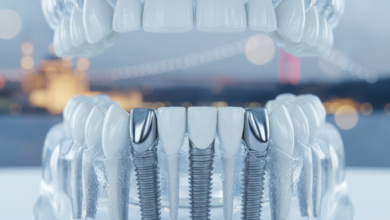
For individuals missing three or four teeth in a row, an implant-supported bridge is an excellent solution. Instead of placing an implant for each missing tooth, two implants are surgically placed at either end of the gap. These implants act as strong anchors for a custom-made bridge that spans the empty space. This approach avoids the need to grind down healthy adjacent teeth, which is a requirement for traditional bridges, thereby preserving your natural tooth structure. The bridge is permanently fixed to the implants, providing a stable, durable, and seamless restoration that looks and feels like your natural teeth.
Implant-Retained Dentures (Overdentures)
For those missing most or all of their teeth in an arch, implant-retained dentures offer a significant upgrade over traditional removable dentures. This method involves placing two to four dental implants into the jawbone. These implants are fitted with special attachments that connect to the underside of a custom denture, snapping it securely into place. While the denture is still removable for cleaning, it will not slip, click, or shift while you are eating or speaking. This added stability dramatically improves chewing efficiency and eliminates the discomfort and sore spots often associated with conventional dentures.
Full Arch Solutions (All-on-4/6)
The All-on-4 or All-on-6 treatment concept is a revolutionary solution for replacing an entire arch of missing teeth. This technique uses just four or six strategically placed implants to support a full, permanent bridge of prosthetic teeth. The posterior implants are often placed at an angle to maximize contact with the existing bone, often eliminating the need for extensive bone grafting procedures. This is a fixed, non-removable solution that provides the ultimate in stability, function, and aesthetics, often allowing for a temporary set of teeth to be placed on the same day as the surgery.
The Step-by-Step Treatment Process
The journey to a restored smile with dental implants is a meticulous, multi-stage process designed to ensure a successful and long-lasting outcome. Each step is carefully planned and executed by a skilled dental team.
Initial Consultation and Planning
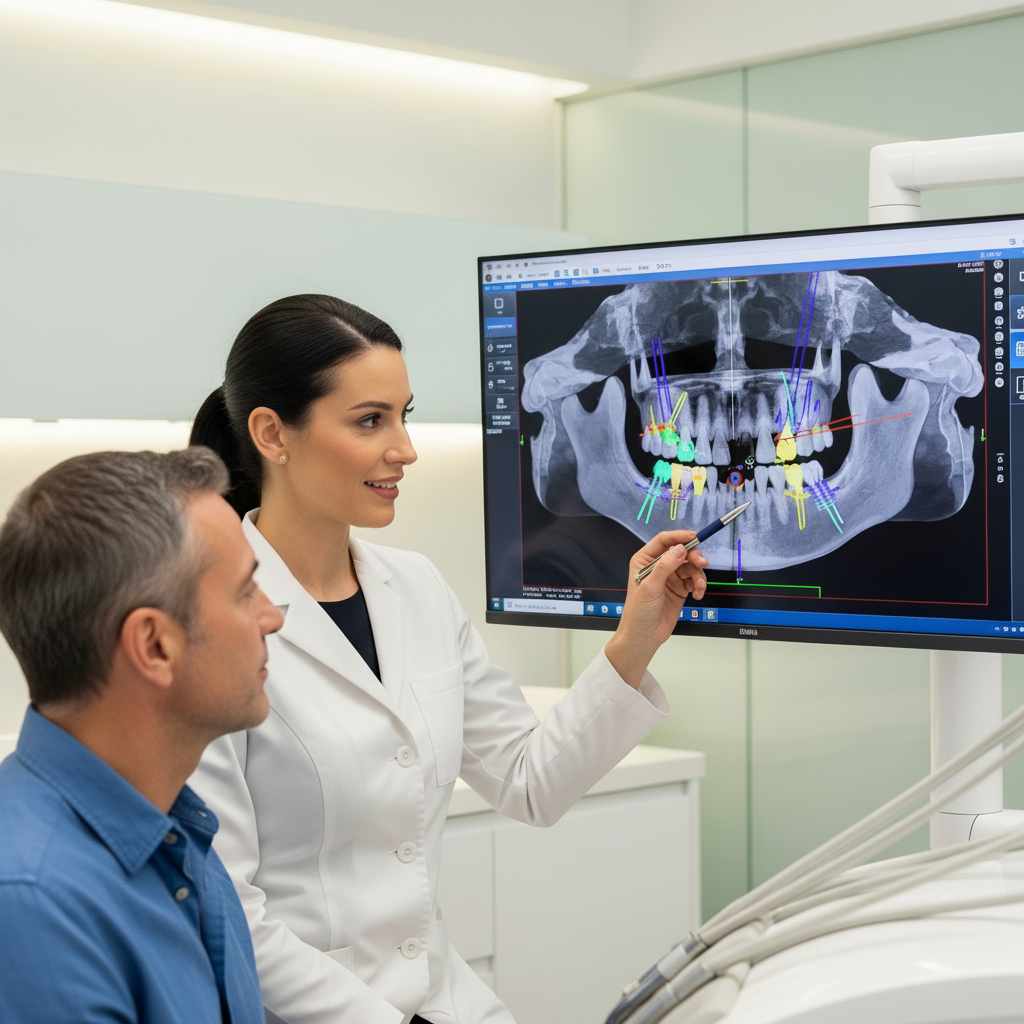
Your treatment begins with a comprehensive evaluation. This includes a detailed oral examination, a review of your medical history, and advanced imaging, typically a Cone Beam Computed Tomography (CBCT) scan. This 3D scan provides a precise view of your jawbone density, nerve pathways, and sinus cavities, allowing the surgeon to plan the exact placement, angle, and size of each implant for optimal results. A personalized treatment plan is then created to meet your specific needs.
The Surgical Procedure
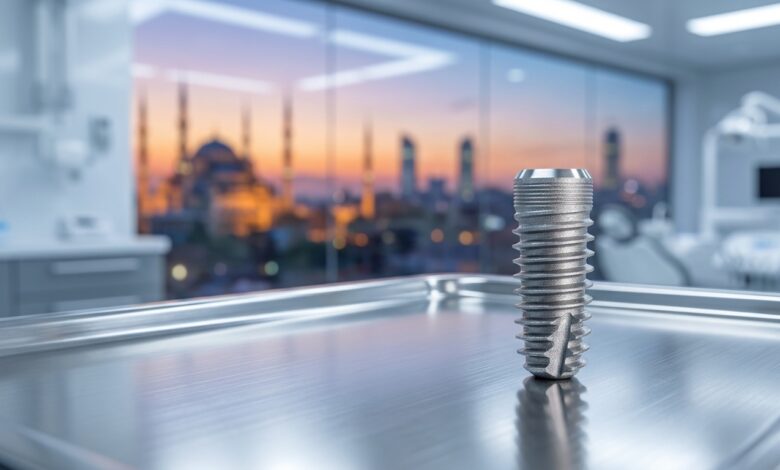
Implant placement is a surgical procedure performed under local anesthesia, with sedation options available for patient comfort. The surgeon makes a small incision in the gum to expose the jawbone. A precise pilot hole is drilled, and the titanium implant post is carefully threaded into place. Once the implants are secured, the gum tissue is sutured closed over them to begin the healing process.
Osseointegration and Healing
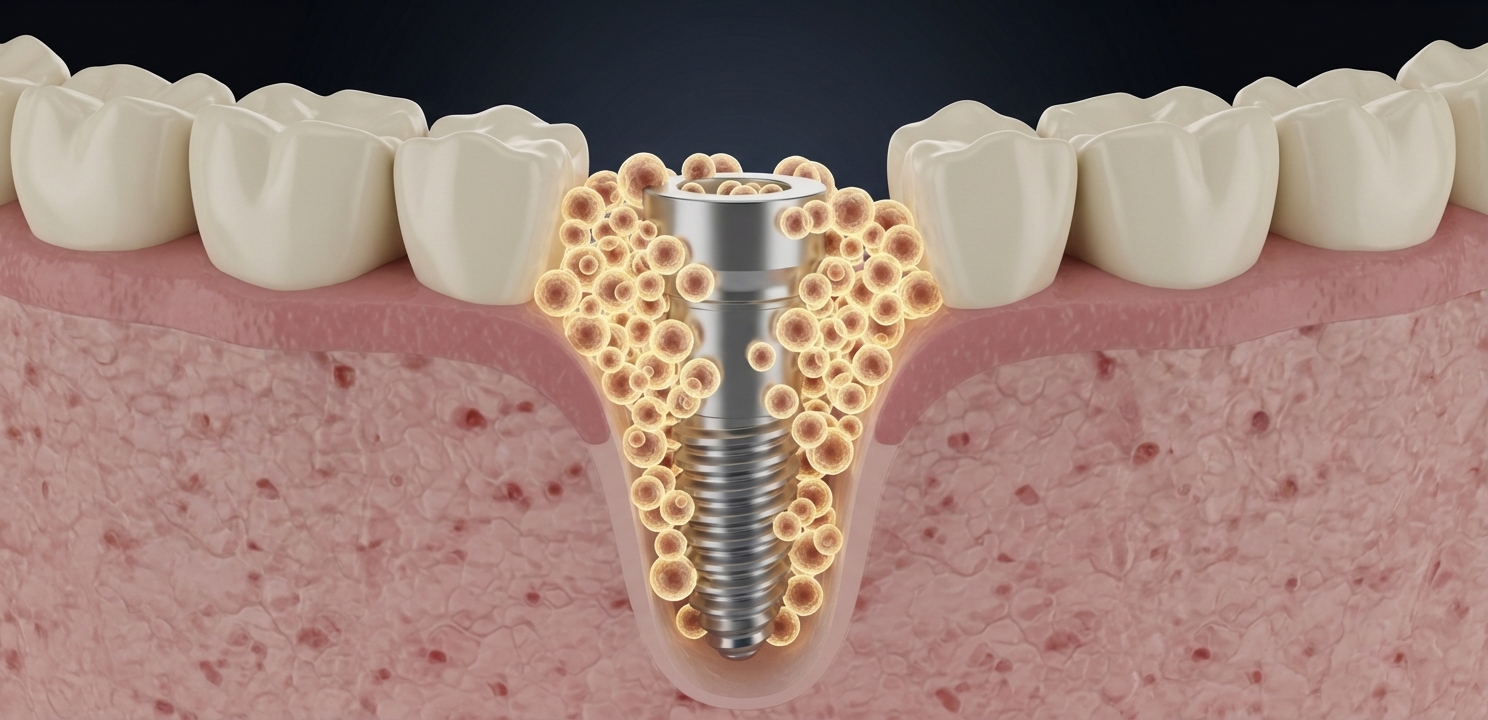
This is the most critical phase of the implant process. Over the next three to six months, the implants undergo a biological process called osseointegration, where the surrounding bone fuses directly with the titanium surface of the implant. This fusion creates an incredibly strong and stable foundation, essentially making the implant a part of your jaw. The long-term success of dental implants is heavily reliant on this process. Scientific studies have consistently shown high survival rates for implant-supported prostheses, confirming their reliability as a long-term solution. A systematic review published by the National Center for Biotechnology Information highlights the excellent long-term outcomes of these restorations. During this healing period, a temporary prosthesis may be provided.
Final Restoration Placement
Once osseointegration is complete, a minor second procedure may be needed to expose the tops of the implants and attach small connectors called abutments. An impression of your mouth and the abutments is then taken to custom-fabricate your final crown, bridge, or full-arch prosthesis. At your final appointment, this permanent restoration is securely attached to the abutments, completing your new, fully functional smile.
Comparing the Options for Multiple Missing Teeth
Choosing the right restoration method depends on various factors, including the number of missing teeth, jawbone health, budget, and personal preference. Below is a comparison of common options.
| Feature | Implant-Supported Bridge | Traditional Bridge | Removable Partial Denture |
|---|---|---|---|
| Support Structure | Dental implants fused to the jawbone | Adjacent natural teeth (ground down) | Gums and remaining natural teeth (with clasps) |
| Jawbone Preservation | Yes, stimulates and preserves bone | No, bone loss occurs under the bridge | No, can accelerate bone loss |
| Longevity | Very high (can last a lifetime) | Moderate (5-15 years) | Low (requires frequent adjustments/replacement) |
| Impact on Healthy Teeth | None, adjacent teeth are untouched | Requires permanent alteration of healthy teeth | Can place stress and wear on anchor teeth |
| Stability and Function | Excellent, feels and functions like natural teeth | Good, but less stable over the long term | Poor, can be unstable and limit chewing |
Why Choose Turkey for Your Dental Implant Procedure?
In recent years, Turkey has emerged as a global hub for high-quality dental tourism, offering advanced procedures at a fraction of the cost found in many Western countries. Clinics in cities like Istanbul combine cutting-edge technology, highly skilled specialists, and exceptional patient care to deliver world-class results. The cost-effectiveness does not come at the expense of quality; clinics use internationally recognized, premium implant brands and adhere to strict European standards of hygiene and care. Patients seeking a comprehensive full-mouth restoration can benefit from all-inclusive packages that often cover the procedure, luxury accommodation, and private airport transfers, making the entire experience seamless and stress-free. This combination of affordability, expertise, and a patient-centric approach makes Turkey an outstanding choice for your dental implant treatment.